

Comfortable in Court, Awkward on Camera? You're Not Alone.
In this article
You can stand in front of a jury and explain why your client deserves justice. You can walk a worried family through a complicated legal issue. Then a camera turns on, and you stumble over your own name.
We see it all the time. Confident attorneys suddenly wonder where to look, what to do with their hands and why an answer they give every day now sounds rehearsed. The good news is that you already know your subject. You just need practice explaining it in this setting.
Nobody Starts Out Polished
Actors rehearse. They try different deliveries and do another take when something needs work. Influencers learn the same way, and their first videos were probably awkward too. Give yourself that same room. Your first recording is simply your starting point.
Say It Out Loud. Then Say It Again.
Pick a question clients ask regularly and answer it out loud in front of a mirror. It may feel strange. Do it anyway.
You’ll hear things you’d miss reading your notes silently: a sentence that runs too long, a legal term that needs explaining, three minutes spent getting to the point. Then try again as though a client were sitting in your office. Keep the information, simplify the wording and give yourself time to breathe.
About Scripts and Teleprompters
We’re not fans of teleprompters. Reading a finished script word for word makes you sound less like the person your clients know, and you end up keeping pace with the words instead of explaining something you care about.
You don’t read to a jury. You speak from the heart, with facts, a plan and an argument you’ve rehearsed. Know your main points, think through an example and rehearse aloud.
Forget the Camera. Talk to Us.
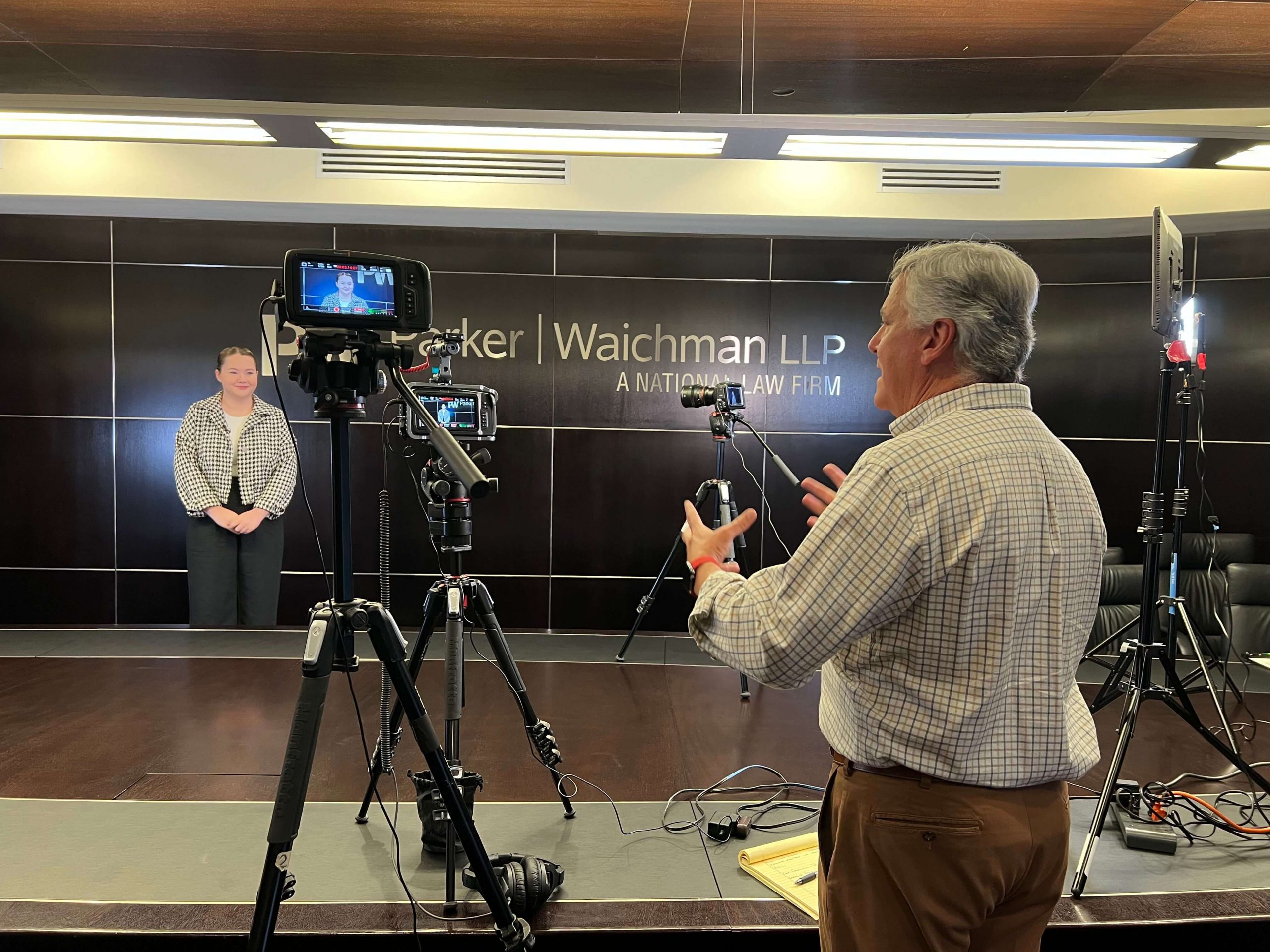
At Attorneys Online, you never have to talk to a lens. You sit across from an interviewer and have a conversation. The camera is there, but it’s not part of it.
Think of the interviewer as the person who needs your answer: a parent whose child was hurt, someone worried about a loved one in a nursing home, a business owner who has never needed a lawyer. Explain it the way you would if that person sat across from you. Give them what they need first and let your concern come through.
Borrow a Few Tricks from Actors
You don’t need to become an actor, but their habits carry over well.
Stand if you can. Standing is our first choice. You have more energy on your feet and you sound more authoritative. It’s harder to frame, so if you sit, sit like you mean it. Keep both feet on the floor, shoulders back and head up, and look the interviewer in the eye. Do as your mother taught you.
Take up space. On a phone screen, you’re small. Command attention, not by yelling but by speaking with authority. Let your presence fill the frame.
Talk with your hands. If you gesture in conversation, gesture on camera. Demonstrative movement adds energy and keeps you from freezing up. When the subject is serious, let your face show it.
Don’t over-emote. The best actors stand and say the lines. They trust the material. Bring energy, not theatrics.
Know what you want. Actors decide what their character wants in every scene. Yours is simple: you want viewers to understand their situation and feel they can call you.
Warm up. Take a few deep breaths, roll your shoulders, shake out your hands and say a couple of sentences out loud before we roll.
Be specific. “Cases like this can be complicated” is forgettable. “A mom calls after her son is hurt at daycare and asks what to do first” is not.
We Make It a Conversation
Our interviewer asks the questions, listens to your answers and follows up when something deserves a clearer explanation. Often, you settle in once the conversation gets going. You forget you’re being recorded and start explaining the subject.
One of our most memorable shoots was with a new attorney who couldn’t get out of his own head. We assured him we wouldn’t ask anything he couldn’t answer, but his anxiety kept growing. When we began, our first question was where his offices were located. He said, “I wish I had known these questions in advance.”
The answer was two offices. (He has two offices.)
It’s Videotape. Take Two.
This is videotape, for goodness’ sake. We can record several takes, and we edit out the false starts, repetition and pauses while preserving what you mean. Videotape is one of the few things in life that allows do-overs, so why stress?
Take a breath before you answer. Pause when you need to think. If you lose your place, stop and begin the thought again.
Keep Recording
The more often you do this, the more familiar it becomes. Watch your videos, pick one thing to improve next time, then practice it. You have useful information to share and a way of explaining it that is your own.
Next: Setting Up a Good Camera Shot. Where you sit, what’s behind you, how the lighting falls and how the camera is framed all shape how viewers see you. Here’s how to set up your shot.